Software simulation of residual stresses in high frequency longitudinal welded pipes
Article Sidebar

Main Article Content
Abstract
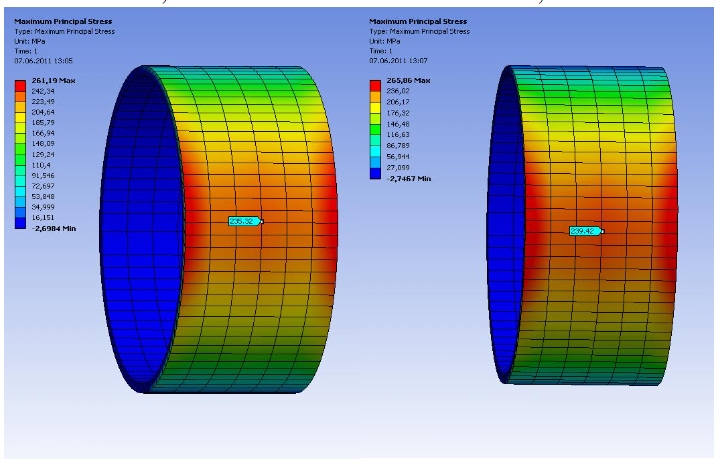
Abstract - This paper presents results obtained via experimental measurements of residual stresses in the cross sections of longitudinal welded pipes. The experiment was carried out in different dimensions and thickness of the pipes where it is noticed that the smaller the diameter of the pipe, the greater the residual stresses because the degree of deformation during the production of pipes with smaller diameter is greater. Residual stresses are measured with strain gages set upon the outside wall of the pipes. The results received from the gages show considering amount of stress captured in the pipe wall because of cold plastic formation process [1]. After cutting the rings, their opening is recorded, which is variable and depends on several parameters such as: ring diameter, thickness, type of material and its reinforcement as well as the degree of plastic deformation when forming the pipe sheath [2]. The difference in the display of the measuring tape when the ring is in the open and closed position is the residual deformation that corresponds to the residual stresses that occurs in the ring.
Article Details