Feasibility of Natural Gas Storage on Carbon Nanotubes – A Review
Article Sidebar
Main Article Content
Abstract
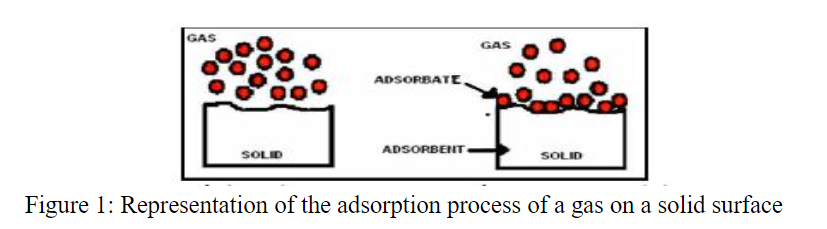
There is a growing demand for the use of natural gas as a clean source of energy but a more efficient and economic means of its storage and transportation is a challenge that constitutes an area of research interest. Natural gas can be stored as liquefied natural gas (LNG) or compressed natural gas (CNG) at about 20-30MPa in heavy steel cylinders, but carbon nanotubes (CNT) have been proposed to be more advantageous in storing and transporting natural gas in light weight containers at a pressure of about 4Mpa. There are two kinds of CNT; single walled carbon nanotubes (SWCNT) and multi-walled carbon nanotube (MWCNT) and their mechanism of gas storage is adsorption. Reports have shown that there is a considerable increase in methane adsorption on SWCNT in the presence of structural defects than in a perfect structure. Studies have also shown that the capacity of MWCNT to store natural gas can be enhanced by treating the nanotubes with acid. It has been generally observed that the methane adsorption capacity of CNT increases as pressure increases but decreases as temperature increases. CNT is speculated to become a prospective candidate for effective storage and transportation of natural gas and may compete favorably with LNG and CNG in future.
Article Details